From Lancashire Mills to Sarasota Palms:
The Extraordinary Journey of
Eileen Hampshire
What turns a girl from a Lancashire textile town into one of North America’s most revered authorities on hand-knotted carpet art?
Lancashire Roots & Chemical Chemistry
Born in Oswaldtwistle, England, Eileen Hampshire came by her textile obsession naturally. Where other children played with dolls, Eileen played with balls of wool. She
grew up watching mill workers lip-read over
the clatter of looms, surrounded by her grandmother’s legacy as one of the region’s finest silk weavers.
Moving to nearby Preston at age four—just 27 miles from Manchester, the world’s first industrial textile city—she was immersed in a region steeped in fabric.
“Think Manchester Kashan and the famous Ziegler Mahals,” Eileen remembers.“The whole area was textile-oriented. At school, my classmates’ fathers brought back exotic treasures from trips to Persia and India. In Preston’s Harris Library, I was mesmerised by Foucault’s pendulum in the atrium and Roman canoes upstairs—beauty and history were everywhere.”
Only recently did Eileen discover another remarkable thread in her heritage: her maternal grandfather was the master dyer for William Blythe Chemicals (established 1845) in neighbouring Church. Her extraordinary eye for colour was in her blood all along.
Scholarship & Myth-Busting
Eileen’s journey took her across the Atlantic to Montreal, where she married into a second-generation rug business. Never content with mere salesmanship, she sought scientific truth: she trained as a laboratory technician and earned a BFA in Art History from Concordia University, completing her thesis on Oriental Rugs in Venetian Renaissance Paintings.
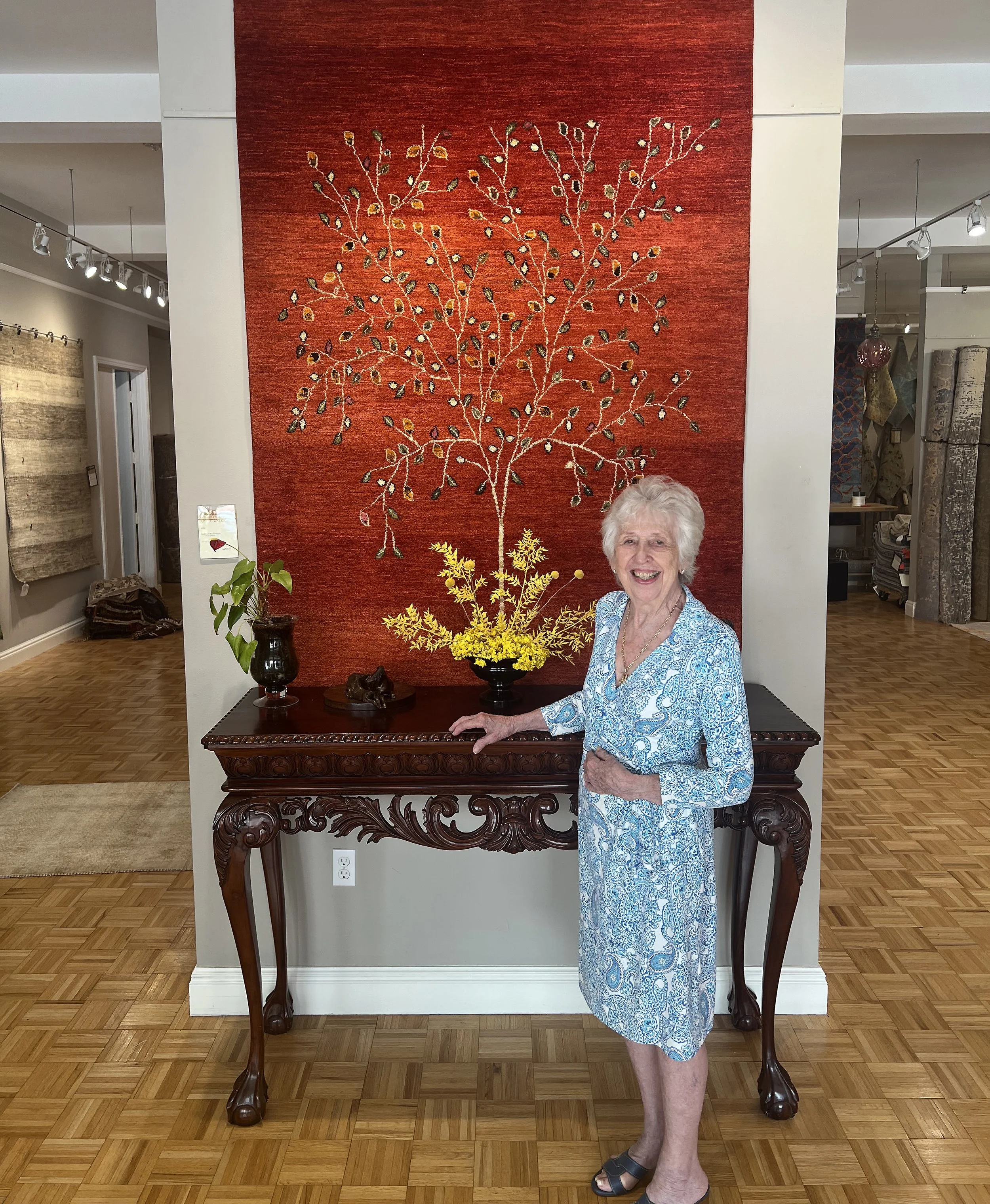
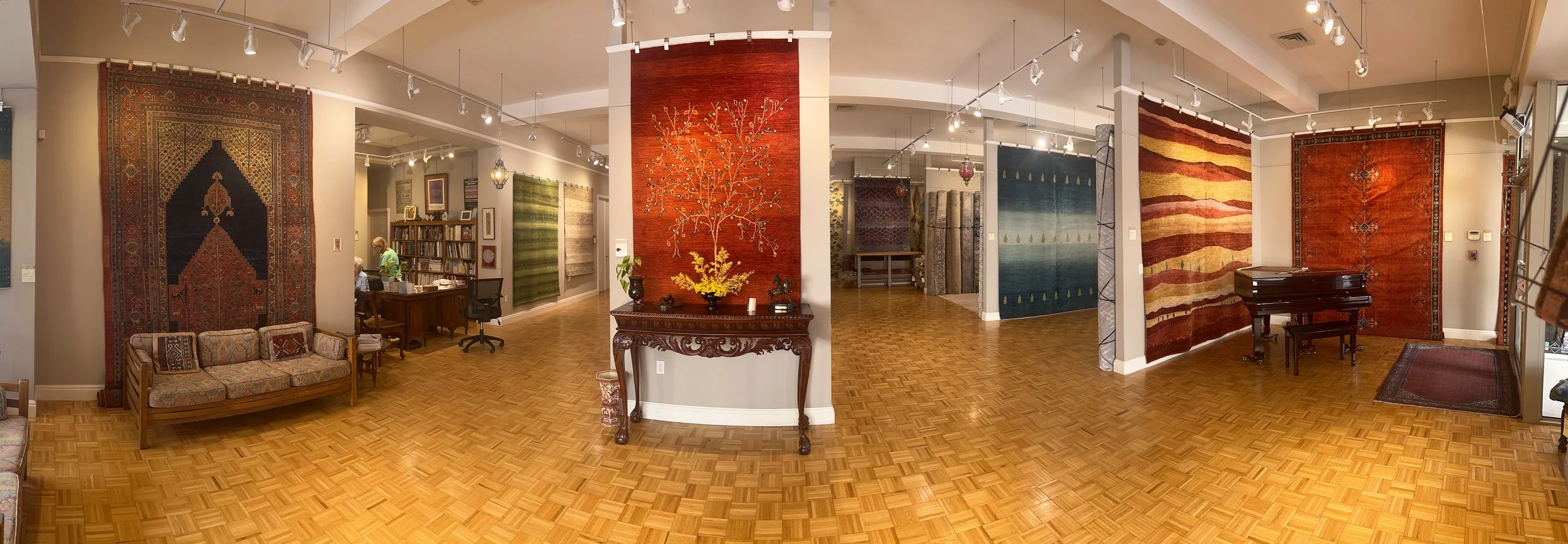
Dismayed by industry myths, she established Art to Walk On in 1988 with an uncompromising commitment to natural, sustainable, hand-knotted art. As a scholar, appraiser, and former president of the Armenian Rugs Society, Eileen curates living history.
When asked about the biggest misconception in the carpet world, her answer is swift:
“Probably that fine rugs are delicate. I have a 400-year-old Bidjar rug that has been well-used but never abused; I could wash it today and it would remain lustrous and supple. You simply cannot do that with viscose, artificial silk, or non-natural fibres.”
Finding Home on Palm Avenue
In 2006, Eileen relocated her gallery to Sarasota’s historic Palm Avenue—a move prompted by pure serendipity during a lunch walk with her mother. Seeing a handwritten “Gallery for Lease” index card in a window, she signed the lease on the spot.
“I went home and said to my husband, ‘You might want to kill me, I think I just leased a gallery on Palm Avenue!’ He simply said, ‘Good for you.’ I never did a better thing.”
Sarasota’s rich heritage as a winter haven for arts patrons—home to an opera, ballet, symphony, and the Ringling Museum’s Renaissance masterworks—proved the ideal setting for her clientele.
The Zollanvari Synergy & Pure Passion
For Eileen, featuring Zollanvari carpets in her gallery is an easy choice:
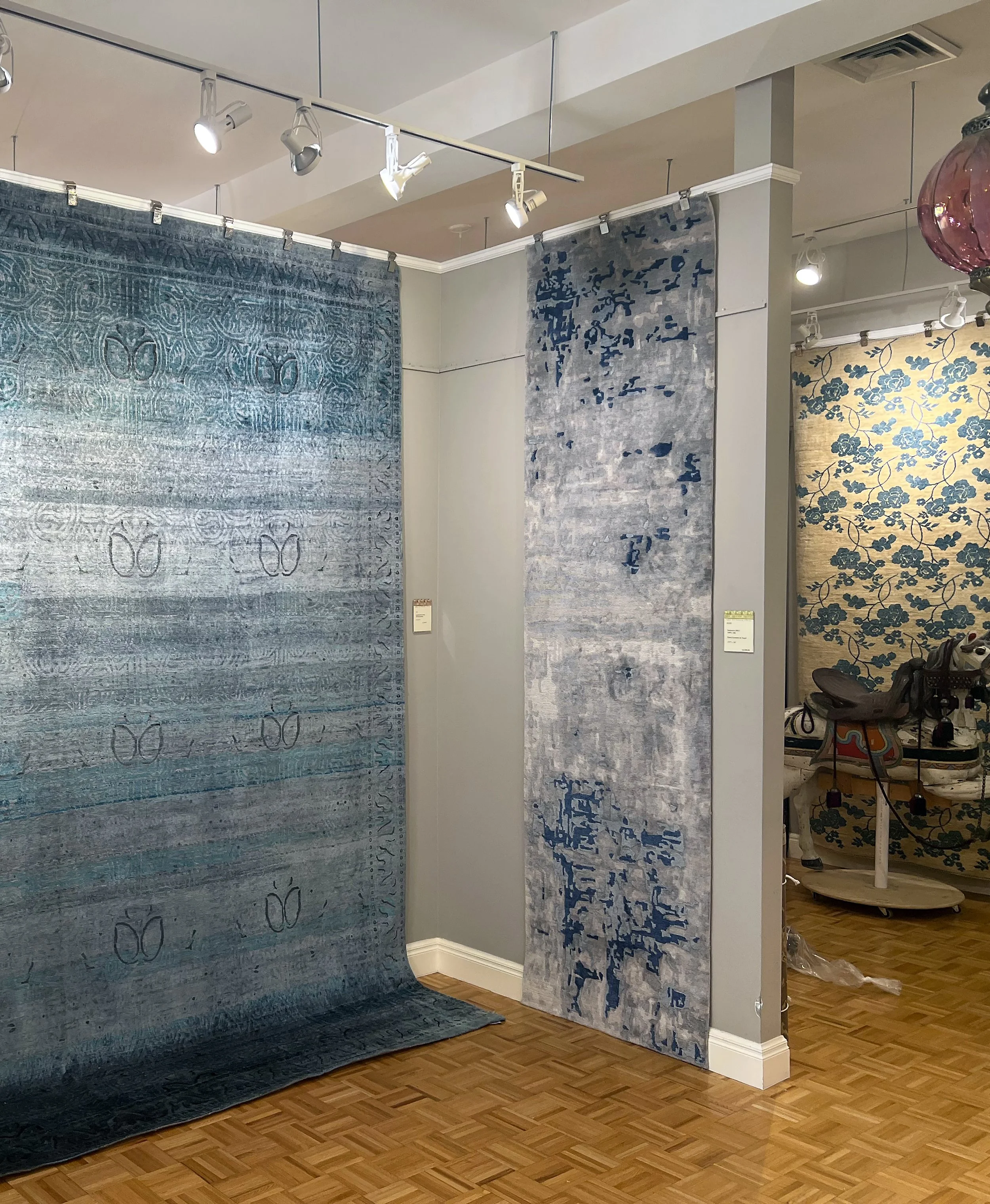
“There is something so pure and honest about their rugs—no compromise on quality. I can be anywhere in the world, enter a rug shop, and spot a Zollanvari rug ten feet away. The wool is lustrous, the design balanced, and the colours rich. They respect and support their weavers, encouraging true creativity. The rugs don’t need to be sold—they sell themselves.”
And when asked which single piece from her personal collection she would keep?
“I just finished having my collection of almost 100 Armenian inscribed rugs photographed for publication—the geometric Caucasian designs speak to me deeply. But then I think of my Persian pieces that I cannot bring myself to part with, and I really can’t choose just one. I guess when I’m not near the rug that I love, I love the rug I am near!”